

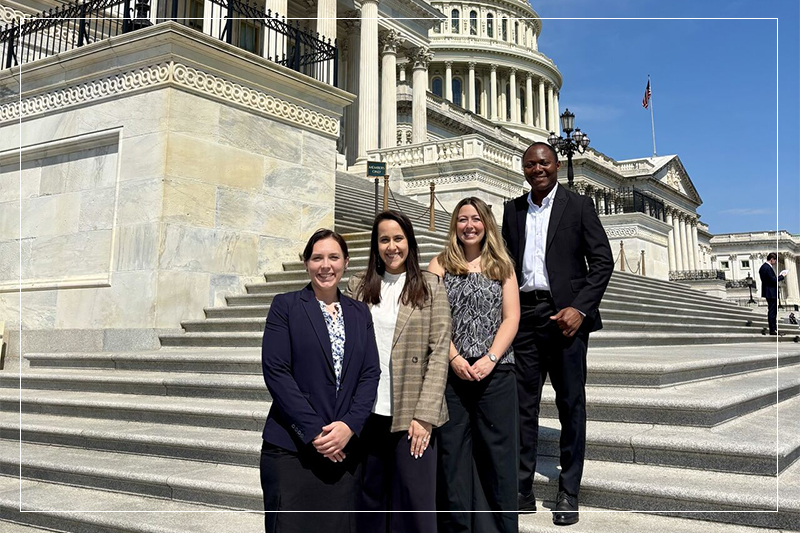
photo courtesy of Madden Solomon
The American Association for the Advancement of Science (AAAS) Catalyzing Advocacy in Science and Engineering (CASE) Workshop provides an opportunity for STEM students to learn from experts on science policy and advocacy in Washington, D.C.
In April 2026, four graduate students represented UGA in the program, learning about the role of science in policy making in the U.S. Congress. Congratulations to Madden Solomon, Ph.D. candidate at the Odum School of Ecology, Christina Endara-Arnold, Ph.D. candidate in the Department of Neuroscience, Taden Welsh, Ph.D. student in the Department of Plant Biology, and Ben Enyetornye, Ph.D. candidate in the Comparative Biomedical Sciences Program at the College of Veterinary Medicine! The Graduate School is proud of your accomplishments, and we are excited for your future endeavors.
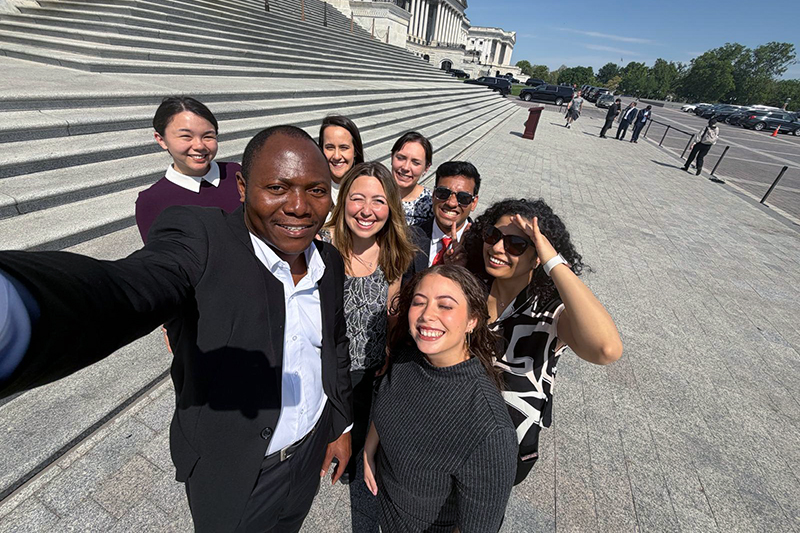
photo courtesy of Ben Enyetornye
What about the CASE program experience had the biggest impact on you and on your overall graduate student experience?
Ben Enyetornye: Attending the 2026 CASE workshop fundamentally reshaped my perspective on science communication, particularly in engaging non-scientific audiences. As scientists, we have traditionally shared our work through scholarly articles, conference posters, and high-level presentations-formats that, while essential within the scientific community, often remain inaccessible to the broader public who ultimately benefit from our research. This experience reinforced my belief that if we are unable to communicate our work in clear, accessible language, we limit its impact and relevance.
In addition, the experience deepened my appreciation for the role scientists play in shaping public policy. Many individuals involved in policy making do not have scientific training, which can create gaps in understanding when decisions involve technical or research-based issues. Active engagement by scientists in the policy process is therefore essential. By clearly articulating the significance, implications, and societal benefits of our work, we can help inform decision-making and advocate for the resources and support necessary to advance scientific progress.
Taden Welsh: The AAAS CASE Workshop educated me on how science policies, as well as policies in general, are developed and enacted. Congressional members primarily gain information regarding bills from the legislative staff members of their office, who gain information from other members’ staff, various groups and lobbyists, and media (i.e. newsletters, ads). However, as AAAS CEO Sudip Parikh poignantly noted, “Trust is built in person-to-person conversations.” As we learned more about how advocates, lobbyists, and staff interact, it became apparent to me that being directly involved with science policy conversations via working in-person with congressional members would have the most weight in having our voices heard as scientists.
Further, knowing that policymakers must consider numerous factors that surround a proposed policy removes the proverbial “blinder” that many scientists or specialists have, such that data and findings create the policy. Rather, our work, in conjunction with conversations with officials, should inform and assist our policymakers in making a decision about a proposed policy. From CASE, I feel engaged with policymakers as a valued constituent, as well as motivated to work with these members to create data-driven policies.
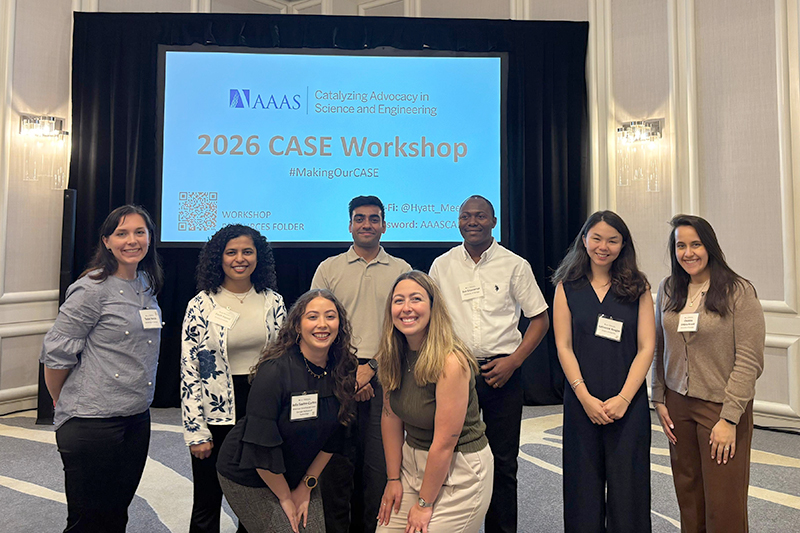
photo courtesy of Ben Enyetornye
What did you like most about the experience in Washington, D.C. with CASE?
Ben Enyetornye: Developing an understanding of the federal budget process was one of the most impactful aspects of my experience. While this knowledge is highly relevant to me as a Ph.D. candidate, it is equally important for faculty members who regularly write and submit grant proposals. Gaining insight into how federal funding decisions are made provides essential context for navigating the broader research landscape. Without the opportunity to participate in the CASE workshop, I would not have developed this level of understanding of how federal budgets are constructed and the complexities involved in aligning competing priorities.
I thoroughly enjoyed my visit to the Hill. In addition to meeting with multiple congressional staff members, I was fortunate enough to sit in on a Hearing, which was a very informative experience. – Taden Welsh
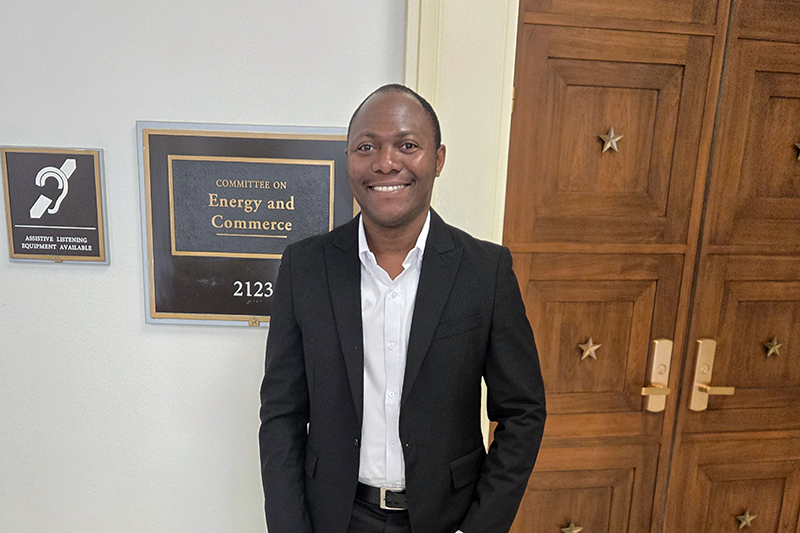
photo courtesy of Ben Enyetornye
What would you say to future graduate students looking to attend the CASE workshop?
Ben Enyetornye: The program offers an exceptional opportunity not only to develop skills in effective science communication, but also to connect with a diverse network of science advocates from across the United States. In addition, participants engage directly with congressional representatives and their staff, creating meaningful opportunities to establish professional relationships and communicate the value of scientific research within a policy context.
CASE is a go-to place if you love science communication and you believe you are an advocate for good science! – Ben Enyetornye
Taden Welsh: I would tell future attendees to make the most of this experience. Take advantage of your Hill visit. Sometimes decisions about a given policy are due to a misunderstanding about the importance of our work. We are attempting to demystify the jargon and unknown behind our work, and science in general, while also attempting to understand the reasoning for a given opinion about a proposed policy (i.e. economic impact, societal acceptance, etc.).


