2025 UGA Presidential Fellows

2025 UGA Presidential Graduate Fellow Award

The University of Georgia’s Presidential Graduate Fellow award is the University’s most prestigious fellowship award for incoming doctoral students.

This year’s exceptionally qualified recipients are recognized for their outstanding scholarship and excellent potential for success in their chosen fields. Nominations for this award are presented to the Graduate School by individual departments or interdisciplinary programs in late January.

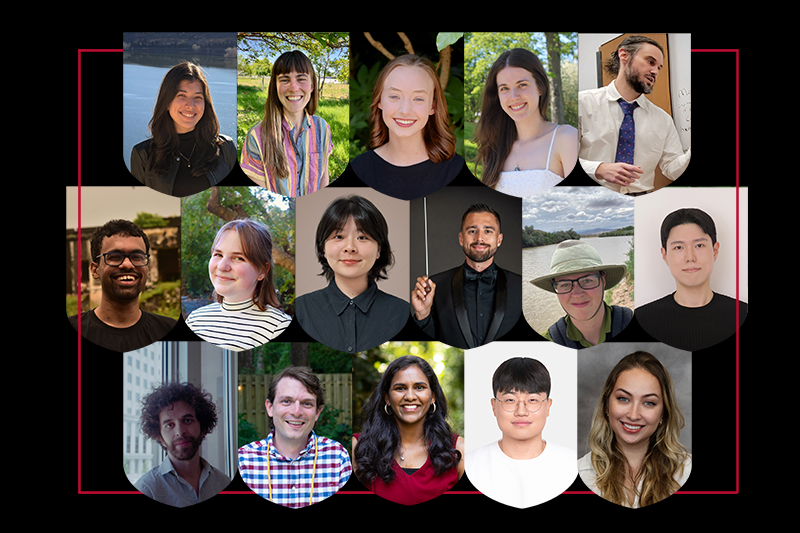
The fellowship offers students four years of annual stipend and travel support in addition to departmental assistantships and tuition waivers. With the 2025 group of 17 incoming fellows representing 16 academic programs, UGA now has 78 Presidential Graduate Fellows on tenure. Presidential Fellows receive professional development and networking opportunities from the Graduate School throughout their program of study.

“I like that being a Presidential Fellow allows me to be more connected to UGA as a whole rather than only connected to my specific department.”

Fellows are expected to engage in research under the guidance of their faculty mentor and take advanced-level courses. Each new Presidential Fellow is required to prepare and submit an Individual Development Plan and a Mentor-Mentee Compact before the Fall semester of their second year.

In addition to being engaged in duties associated with their assistantship and graduate studies on a full-time basis, recipients meet regularly to discuss current topics such as Communicating Research and Scholarship and Getting the Most out of Mentoring.

“So many bright minds together, going through similar experiences, kinda feels very assuring.”
Congratulations to the 2025 Recipients

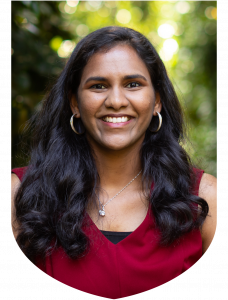
Caroline Bendickson
Department of Crop and Soil Sciences
College of Agricultural and Environmental Sciences

Caroline Bendickson

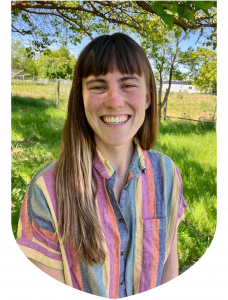
Caroline Bendickson is a doctoral student in the Department of Crop and Soil Sciences at the University of Georgia. Her research interests explore complex processes such as floral development and gene regulation through genetic and genomic approaches.

Bendickson earned her bachelor’s in Biology and Chemistry from the University of Alabama in Huntsville. During her time there, she conducted multiple undergraduate research projects at HudsonAlpha Institute for Biotechnology. In Dr. Alex Harkess’s evolutionary plant genetics lab, she independently led the reconstruction of a molecular-based phylogeny for the genus Trillium using Angiosperms353 bait capture, and she was named a Goldwater Scholar in 2024 based on her Trillium research. Caroline also helped assemble a genome for Auburn University’s iconic “Toomer’s oak” (Quercus virginiana) as part of the American Campus Tree Genomes initiative.

Continuing her time at HudsonAlpha, Bendickson transitioned to Dr. Richard Myers’s human genetics lab where she tested a novel tool, DegCre, which she used to predict associations between genes and regulatory regions. Additionally, Bendickson returned to the Harkess lab and worked with Ph.D. candidate Laramie Aközbek to develop and test a computational pipeline called OrthoScout.

Bendickson’s passion for plant biology stems from her lifelong love for the outdoors. Hiking and visiting national parks fuel her curiosity and interest in understanding diverse plant species better and contributing to their conservation. As one of the leading universities in plant biology research, she is excited to continue her education and exploration of plant genetics, genomics, and evolution at the University of Georgia as a NSF Graduate Research Fellow

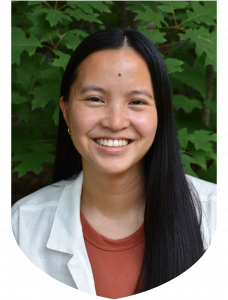
Sumin Cheon
School of Social Work

Sumin Cheon

Sumin Cheon is a doctoral student in the School of Social Work at the University of Georgia. His research interests lie in data-driven child maltreatment prevention, incorporating AI with an emphasis on ethics and equity, and community-based strategies for inclusive prevention. Cheon aims to grow as a scholar to advance child protection efforts that reach every child and family, motivated by his own experience in South Korea’s child protection systems.

Cheon received his Bachelor of Social Welfare from the University of Seoul. He was awarded the President’s Award for Academic Excellence three times, the Seoul Mayor’s Award as summa cum laude, and delivered the commencement address as the top graduate. Additionally, Cheon holds a Master of Arts in Social Welfare from Seoul National University.

Before coming to the University of Georgia, Cheon participated in diverse volunteer activities for children’s welfare and rights and worked as a full-time case manager for child protection at an NGO in Cambodia. He contributed to government-funded research projects related to child welfare and maltreatment prevention, particularly in developing predictive risk models grounded in big data and machine learning to inform targeting-focused maltreatment prevention services.

Cheon looks forward to continuing his research at the University of Georgia. He appreciates the school’s commitment to equity and the opportunities to receive mentorship that aligns with his research goals.

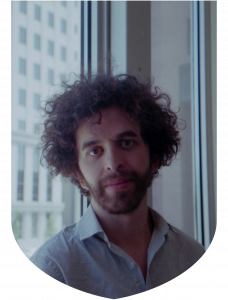
Soumyaneel Dasgupta
Department of Comparative Literature and Intercultural Studies
Franklin College of Arts and Sciences

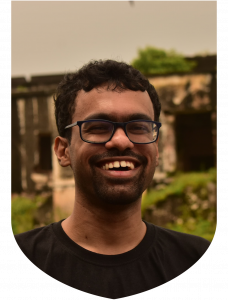
Soumyaneel Dasgupta

Soumyaneel Dasgupta is a doctoral student in the Department of Comparative Literature and Intercultural Studies at the University of Georgia. His primary research interests include migration studies, Jewish studies, and science fiction.

He obtained his undergraduate, master’s, and master of philosophy degrees in Comparative Literature from Jadavpur University in Kolkata, India. Dasgupta has also worked as a research assistant at the Indian Institute of Management–Calcutta.

Dasgupta chose to pursue his Ph.D. at the University of Georgia to explore the plethora of enticing literature courses the program has to offer, and to work alongside Professors Ari Lieberman and Dorothy Figueira. Moving forward, he wants to carve out a career as an academic and pursue research.

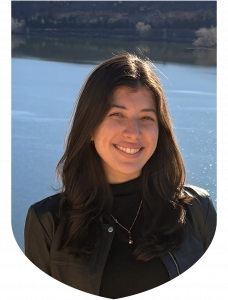
Sarah De Souza
Department of Plant Pathology
College of Agricultural and Environmental Sciences

Sarah De Souza

Sarah De Souza is a doctoral student in the Department of Plant Pathology at the University of Georgia, working under the guidance of Dr. Ruchika Kashyap in the Urban and Controlled Environment Pathology (UCEP) Lab. De Souza’s research explores the population structure, diversity, and ecology of oomycetes in controlled-environment agricultural systems in Georgia.

Early in life, De Souza was introduced to agriculture and its challenges, which sparked her interest in science and extension. She is committed to furthering her understanding of plant pathogenic oomycete species ecology and bridging research and outreach by enhancing knowledge of oomycete biology and developing sustainable disease management strategies for Georgia growers.

De Souza obtained her B.Sc. in Agronomy at the Federal Institute of Science, Education, and Technology of Southern Minas Gerais, Brazil. As an undergraduate, she was awarded a fellowship from the Minas Gerais State Research Support Foundation (FAPEMIG) for a project investigating the effects of different organic substrates in Brazilian cherry seedling production, leading to her first scientific publication. In 2025, De Souza earned her master’s degree in Plant Pathology at the University of Wisconsin-Madison, studying the oomycete distribution and diversity in soybean fields in Wisconsin and evaluating seed treatments against these species. Her research supported soybean disease management strategies across Wisconsin through outreach efforts.

As the first in her family to earn a master’s degree and pursue a Ph.D., De Souza is excited to continue pursuing her passion of making science accessible to the community through extension at the University of Georgia.

Daniel Deweese
Department of Philosophy
Franklin College of Arts and Sciences

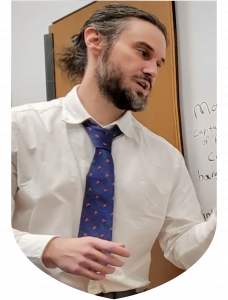
Daniel Deweese

Daniel Deweese is a doctoral student in the Department of Philosophy at the University of Georgia. His research interests include German Idealism and its aftermath, the Enlightenment, liberalism, and the philosophy of history.

His work will shed critical light on Hegel’s conception of philosophy as the science
of freedom. Deweese will interrogate the conditions of possibility necessary to grasp philosophy as a self-grounded expression of freedom. Delving into varied research interests—from the Enlightenment to German Idealism—he will pose the open question of freedom as the red thread that extends through all modern philosophy.

Deweese completed his undergraduate degree in Philosophy at the University of South Carolina and holds a master’s degree in clinical Mental Health Counseling from South University. In 2024, he completed his second master’s degree at the New School for Social Research where he earned an M.A. in Philosophy with a concentration in Psychoanalytic Studies. He is also a candidate Psychoanalyst at the Lacan School of Psychoanalysis (LSP) and a former LSPBoard Member. Deweese has published several articles and presented at numerous conferences.

While at the University of Georgia, Deweese is devoted to strengthening his teaching skills and conveying the philosophical canon in a charitable manner. Specifically, he pledges to inspire young people to understand this tradition and develop the critical thinking skills that accompany it. He is honored to undertake this task as a Presidential Fellow at the University of Georgia and is excited to engage in research under the mentorship of UGA Philosophy’s esteemed faculty.

Karin Ebey
Odum School of Ecology

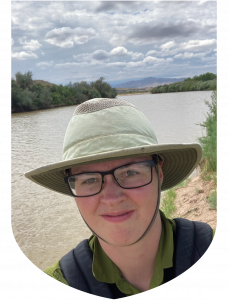
Karin Ebey

Karin Ebey is a doctoral student in the Odum School of Ecology at the University of Georgia, working under Dr. Ben Parrott. She is passionate about herpetology and has interest in ecology and field theoretical methods.

Ebey earned a B.S. from Eckerd College with majors in Biology, Chemistry, and Mathematics. During her undergraduate studies, Ebey worked on a variety of research projects from turtle niche partitioning in New Mexico to invasive brown anole morphology using museum specimens to mathematically modeling disease spread and population dynamics.

Ebey looks forward to working in Dr. Parrott’s lab and continuing her research on herpetofauna.

Claire Eilers
Department of Marine Sciences
Franklin College of Arts and Sciences

Claire Eilers

Claire Eilers is a doctoral student in the Department of Marine Sciences at the University of Georgia, working under the guidance of Dr. Nick Foukal. Her research interests lie specifically in physical oceanography, particularly in polar regions, and unraveling the dynamics of large-scale ocean transport systems.

At the University of Georgia, Eilers will be using observational data from a mooring array in the Eastern Greenland Coastal Current to probe the current’s role in the Arctic-Atlantic freshwater exchange. This project, as well as many other exciting opportunities and resources available through UGA and the Skidaway Institute of Oceanography, drew Eilers to study at the University.

Eilers received her B.A. in Geoscience at Williams College in Williamstown, Massachusetts. She worked as a research assistant on projects ranging from coastal geomorphology on beaches in Western Ireland to sedimentary methane flux in the Bering Sea. Her senior thesis focused on a specific sea ice feature and analyzing sub-ice sonar data to understand its morphology.

While studying at the University of Georgia, Eilers hopes to develop as a young researcher and pursue adjacent interests in science communication and policy. Having never spent time in the South, she is also looking forward to a new environment and community.

Jordan Fansler
Hugh Hodgson School of Music

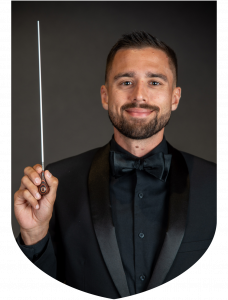
Jordan Fansler

Jordan Fansler is a doctoral student at the Hugh Hodgson School of Music with an emphasis in Wind Conducting at the University of Georgia, under the guidance of Dr. Nicholas Enrico Williams. His research interests include conducting pedagogy and performing arts medicine for conductors and instrumentalists.

He earned a Bachelor’s of Music Education from the University of Illinois at Urbana-Champaign, where he was honored with the University of Illinois Bands’ Gary E. Smith Excellence in Leadership Award. He also holds a Master of Music in Wind Conducting from Oklahoma State University, where he studied with Dr. Bradley Genevro.

Fansler is a passionate educator and conductor dedicated to shaping the next generation of musicians and leaders. From 2019 – 2023, he served as Director of Bands at Harold L. Richards High School, where he led a diverse and dynamic program that inspired students to grow as both musicians and people. Each summer, Jordan serves as co-director of the Legacy of Leadership Marching Band Seminar at Western Illinois University, mentoring students to become selfless, passionate, and effective
leaders within their communities.

Pravalika Irukulla
School of Chemical, Material, and Biomedical Engineering
College of Engineering

Pravalika Irukulla

Pravalika Irukulla is pursuing a Ph.D. in the School of Chemical, Material and Biomedical Engineering at the University of Georgia. Her major professor is Dr. Elizabeth Brisbois. Irukulla’s general research interests include medical device development, personalized treatment options, and accessible patient care.

Pravalika graduated in 2023 with her Master’s of Science in Biological Engineering from the University of Georgia. She received her Bachelor’s in Biological Engineering with an emphasis in Biomedical studies and an undergraduate certificate in Informatics in 2022 from the University of Georgia.

For the past two years, Irukulla has worked in the medical device industry, where she
contributed to the development and optimization of technologies aimed at improving
patient outcomes. She has been an active member in the community providing medical services and health education to underserved populations.

Irukulla is excited to pursue her Ph.D. at the University of Georgia as the translation
research, interdisciplinary collaboration, and service-driven innovation make an ideal
environment to refine her technical skills and broaden the impact of her research. Looking ahead, Irukulla aims to play a key role in the advancement of novel medical technologies and improve the efficacy of current devices with the use of nitric oxide.

Jieun Lee
Louise McBee Institute of Higher Education

Jieun Lee

Jieun Lee is a doctoral student in the Louise McBee Institute of Higher Education
at the University of Georgia, working under Dr. Meseret F. Hailu. Her research interests center on how institutional logics and market-driven practices shape student belonging and university-community engagement. She is especially interested in how institutions can build equity-driven partnerships that move beyond hierarchical relationships and foster mutuality and shared power with communities.

Lee began her higher education journey at Hanyang University in South Korea, where she earned her bachelor’s degree in business administration. She later earned a
master’s degree in education at Iowa State University, along with a Graduate Certificate in Education for Social Justice. At Iowa State, she supported undergraduates navigating academic challenges through holistic coaching and inclusive learning strategies.

As a student affairs specialist, she led social innovation and service-learning programs that connected students with communities through civic engagement and leadership development. Her perspective on higher education is shaped by lived experience navigating diverse educational systems across South Korea, the Philippines, and the United States, including public and private schools as well as time outside formal education. These transnational and cross-system experiences inform her understanding of how education can serve as both a source of opportunity and a mechanism of exclusion, especially for those who fall outside of dominant pathways.

Lee is excited to join the McBee Institute, where she will work toward becoming a scholar who challenges dominant logics and reimagines higher education as a space for critical possibility, solidarity, and transformative change.

Sangdo Lee
Department of Political Science
School of Public and International Affairs

Sangdo Lee

Sangdo Lee is a doctoral student in the Department of Political Science at the University of Georgia. His research focuses on the psychological impacts of political polarization, investigating how partisan antipathy influences voting behavior and political identities.

Having originally studied in the UK, Lee earned his bachelor’s degree in Combined Honours in Social Sciences (Politics & IR, Sociology and Economics) at Durham University. He received his master’s degree in Political Science from Seoul National University after returning to South Korea to complete his military service.

While studying at Seoul National University, Lee worked as a research assistant at the Center for Political Communication where he conducted survey research for presidential and National Assembly elections. He also led the design and translation of the questionnaire for the Comparative Study of Electoral Studies (CSES) Module 6 South Korea team, and his research has been presented at numerous conferences. Lee was awarded the Best Paper Award at the 2024 Korea Association for Survey Research Spring Conference for his experimental work on partisan affect measurements.

Lee is excited to join the community of political behaviorists at the University of Georgia and looks forward to learning from and collaborating with faculty and fellow scholars. He plans on pursuing a career as a tenure-track faculty member upon graduation and continuing research as a contributing member of political science.

Katherine McFerrin
Odum School of Ecology

Katherine McFerrin

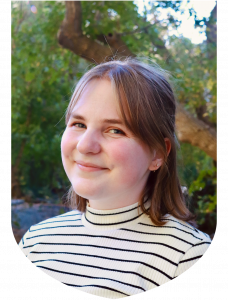
Katherine McFerrin is a doctoral student in the Odum School of Ecology at the University of Georgia, where she is advised by Dr. Tamika Lunn. Her research focuses on bat viral diversity, cross-species pathogen transmission, bat ecology, movement ecology, human-wildlife interactions, and conservation.

During her Ph.D., McFerrin hopes to investigate how spatial ecology and viral shedding dynamics in anthropogenic landscapes affect pathogen persistence in bats and spillover risks for humans and domesticated animals in Kenya. She also plans to develop science communication and teaching initiatives abroad.

McFerrin earned her B.A. in Biology from Carleton College. Her interest in disease ecology began when she was awarded the Kolenkow-Reitz Fellowship to conduct hantavirus surveillance in wild rodents with Dr. Stephanie Seifert at Washington State University. Shortly after, she studied abroad in Uganda, where she led a project evaluating human-bat interactions and perceptions of bats among communities living near bat caves.

After graduating, McFerrin spent over a year in Madagascar where she worked with Dr. Cara Brook to study viral ecology in Malagasy fruit bats while she co-led a team of Malagasy students and technicians to capture and sample fruit bats. This work, part of a longitudinal field project studying viral persistence and transmission dynamics in bats, solidified her desire to further study bat viral ecology as well as explore community-based conservation initiatives.

McFerrin has a passion for wildlife ecology and learning new languages and cultures. She is thrilled to join UGA’s vibrant community of disease ecologists.

Matthew Moore
Department of English
Franklin College of Arts and Sciences

Matthew Moore

Matthew Moore is a doctoral student in the Department of English at the University of Georgia. His research interests include the study of poetry as a genre of history, with particular attention paid to tracing a genealogy of U.S. poetry whose political directives branch from Modernism to Southern Agrarianism. He has additional interests in translation studies and the translation of Slovenian poetry circa the Second World War.

Moore received a B.A. from Kenyon College and an M.F.A. from the Michener Center for Writers at the University of Texas at Austin.

Prior to coming to the University of Georgia, Moore published a poetry collection, The Reckoning of Jeanne d’Antietam (University of Nevada Press), and is the translator of Opera Buffa by Tomaž Šalamun (Black Ocean). Moore has also translated a chapbook, Padova by Igo Gruden (Adjunct Press).

Ana-Gabriela Osorio
Department of Psychology
Franklin College of Arts and Sciences

Ana-Gabriela Osorio

Ana-Gabriela Osorio is a doctoral student in the Department of Psychology at the
University of Georgia. She will be joining Dr. Melissa Robertson’s Relationships and Work Lab where they will research the role relationships play in diversity and inclusion, as well as in personal and professional development within both academic and workplace settings. Osorio’s own research interests include the challenges that immigrants face in the workplace and practical strategies to create and sustain inclusive workplace environments.

Osorio graduated from Florida State University with a dual bachelor’s degree in Psychology and Statistics. During her time at Florida State, she participated as an undergraduate research assistant in many labs such as Dr. Beth Philips’ Voices II lab, the Learning through Collaborative Design – Professional Development (LCD-PD) Project. She participated most extensively in Dr. Shengli Dong’s lab, which focuses on promoting successful transitions to higher education and employment for minority individuals.

While at Florida State University, Osorio also was actively involved in the Undergraduate Research Opportunity Program (UROP). She participated as both a student and a UROP Leader, where she taught a bi-weekly colloquium for two years. In this role, she guided students through the research process, prepared them for their assistantships, and supported them in developing and presenting their final research posters.

Nilton Quirolli
Department of Sociology
Franklin College of Arts and Sciences

Nilton Quirolli

Nilton Quirolli is a doctoral student in the Department of Sociology at the University of Georgia, working under the supervision of Dr. Patricia Richards. His research interests include domestic violence against women, institutional interpretations of gender violence legislation, and the structural shortcomings that hinder the protection of women’s rights.

His research interests emerged from his experience as a law clerk at a domestic violence against women court, where he witnessed how contrasting interpretations of the law by different legal actors impacted the enforcement of women’s rights. After publishing an article about the court’s practices, he realized that academia provided the space to examine how institutional logics and legal reasoning shape the implementation of protective laws.

While in Brazil, he earned his law degree from the Universidade Estadual de Maringá. Quirolli later decided to pursue a master’s degree in Latin American Studies at the University of Florida, where he critically analyzed legal arguments for both restrictive and expansive readings of Brazil’s domestic violence legislation. In recognition of his academic work and engagement, he received the Certificate of Outstanding Merit from the UF International Center.

Quirolli chose the doctoral program in Sociology at the University of Georgia for its strong tradition in Latin American studies and faculty expertise in both qualitative and quantitative research. He was also drawn to the program’s emphasis on rigorous training and teaching experience, which aligns with his goal of pursuing a career as a professor.

Emily Takamasa
Department of Communication Studies
Franklin College of Arts and Sciences

Emily Takamasa

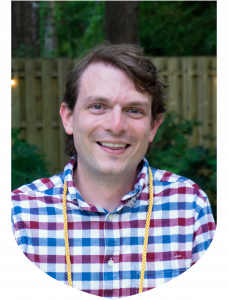
Emily Takamasa is a doctoral student in the Department of Communication Studies at the University of Georgia. Her research draws on critical and intergroup theories to explore how children and adolescents learn about race and racism through communication. She focuses on three interrelated areas: racialized development in youth of color, multiracial identity experiences, and how white children come to understand and enact antiracism. Her work aims to support more just and affirming developmental contexts for all youth across race.

Takamasa’s research is driven by a commitment to racial justice in childhood— grounded in the belief that every child deserves to grow up safe, affirmed, and free to imagine their future. She is particularly passionate about research that amplifies the lived experiences of racially marginalized youth and informs family and educational practices.

Prior to coming to the University of Georgia, Takamasa earned her master’s degree in Human Development and her B.S. in Family Sciences with University Honors from Brigham Young University. During that time, she worked in multiple research labs, contributing to projects on racial bias in middle childhood, the identity experiences of multiracial emerging adults, and a content analysis of how race and ethnicity are portrayed in young children’s media. She is an author and co-author on several publications and has presented her work at national and international conferences in developmental and family science.

As a Presidential Graduate Fellow, she is excited to join UGA’s vibrant community of scholars and to build research that bridges developmental science, communication, and critical theory in service of social change.

Bryn Watkins
Department of Crop and Soil Sciences
College of Agricultural and Environmental Sciences

Bryn Watkins

Bryn Watkins is a doctoral student in the Department of Crop and Soil Sciences, where she works in the Social Sustainability of Agrifood Systems Lab led by Dr. Jennifer Jo Thompson. Her research explores how farmers navigate the tension between economic coercion and environmental necessity.

Her work draws on qualitative interview methods to examine climate adaptation, food security, and embeddedness in the context of neoliberal globalism and the unfolding polycrisis. Watkins believes that an ethnographic approach best amplifies the lived experiences of those most responsible for stewarding land and food systems through this unprecedented moment.

Watkins holds a bachelor’s degree in Food Systems and Community Resilience with a minor in Economics from the University of Utah and a master’s degree in Environment and Society from Utah State University. While at Utah State University she studied the impact of the economic growth imperative on both commodity producers and smallholders in the Intermountain West, where shrinking water resources in the Great Salt Lake Basin threaten human and more-than-human communities.

In addition to her academic research, Watkins has worked across the food system, from farms in the Czech Republic to rural Quebec in farm-to-table kitchens across the U.S. Additionally, she worked with nonprofits focused on food access, gleaning, and urban gardening. Watkins believes the work of feeding each other well requires community, integrity, and lots of salt.


2024 Recipients

Javier Agredo
Department of Linguistics, Franklin College of Arts and Sciences

Nuzha Baksh
Odum School of Ecology

Aidan Branney
Warnell School of Forestry and Natural Resources

Hannah Budroe
Department of Marine Sciences, Franklin College of Arts and Sciences

Daylin Delgado
Department of Psychology, Franklin College of Arts and Sciences

Michelle DeMers
Department of Marine Sciences, Franklin College of Arts and Sciences

Lauryn Famble
Department of Genetics, Franklin College of Arts and Sciences

Jasmine Gaillard
Department of Health Promotion & Behavior, College of Public Health

Priyadarshini Gogoi
Department of English, Franklin College of Arts and Sciences

Jennifer Jiang
Department of Biomedical Engineering, College of Chemical, Materials and Biomedical Engineering

Shan Jiang
Department of Environmental Health Science, College of Public Health

Simrandeep Kaur
Department of Plant Pathology, College of Agricultural & Environmental Sciences

Jiyoung Kim
Department of Human Development and Family Sciences, College of Family and Consumer Sciences

Alejandro Nagera Medellin
Department of Anthropology, Franklin College of Arts and Sciences

Constance Owl
Department of History, Franklin College of Arts and Sciences

Olivier Pilette
Department of Anthropology, Franklin College of Arts and Sciences

Kalpaka Pradip
Department of Kinesiology, Mary Frances Early College of Education

Thamengie Richard
Department of Psychology, Franklin College of Arts and Sciences

Diana Trindade Drumond
Department of Romance Languages, Franklin College of Arts and Sciences

Shariful Tushar
Department of Textiles, Merchandising and Interiors, College of Family & Consumer Sciences

Justin White
Conducting Studies Department, Hugh Hodgson School of Music

2023 Recipients

Sarieh Amiribeirami
Department of Anthropology, Franklin College of Arts and Sciences

Rui Bai
Department of Anthropology, Franklin College of Arts and Sciences

Evelyn Barrales
Human Development/Family Sciences, College of Family and Consumer Sciences

Aditi Bhadauria
Environmental, Civil, Agricultural, and Mechanical Engineering, School of Chemical, Materials and Biomedical Engineering, College of Engineering

Eduardo Monteiro Burkle
International Affairs, School of Public and International Affairs

Karla Carvalho de Almeida
Environmental Design and Planning, College of Environment and Design

Onyinye Choko
Department of Sustainability, Warnell School of Forestry and Natural Resources

Gisell Fuentes
Department of History, Franklin College of Arts and Sciences

Chadley Hollas
Warnell School of Forestry and Natural Resources

Andy Jiang
Department of Chemistry, Franklin College of Arts and Sciences

Jovan Johnson
J.M. Tull School of Accounting, Terry College of Business

Hunter Jones
Louise McBee Institute of Higher Education

Marta Mohedano Jurado
Industrial-Organizational (I/O) Psychology, Franklin College of Arts and Sciences

Kobina Oduro (Kobi) Korankye
Department of Philosophy, Franklin College of Arts and Sciences

Dallas Kreisa
Institute of Plant Breeding, Genetics & Genomics

Yu Wen Lu
Department of Sociology, Franklin College of Arts and Sciences

Fabio Mariano
Department of Romance Languages, Franklin College of Arts and Sciences

Ryan Martinez
Department of Communication Studies, Franklin College of Arts and Sciences

Laura Mathews
Department of Statistics, Franklin College of Arts and Sciences

Delaney Morgan
Department of Mathematics, Franklin College of Arts and Sciences

James Oni
Ecology, Odum School of Ecology

Elizabeth Thomas
Integrated Plant Sciences Program

Danielle Vaughn
Educational Psychology, Mary Frances Early College of Education

William Walker
Higher Education, Louise McBee Institute of Higher Education

Yao Yao
Political Science, School of Public and International Affairs


Unlocking potential. Building futures.

Apply Today