


Congratulations to the 2026 Recipients
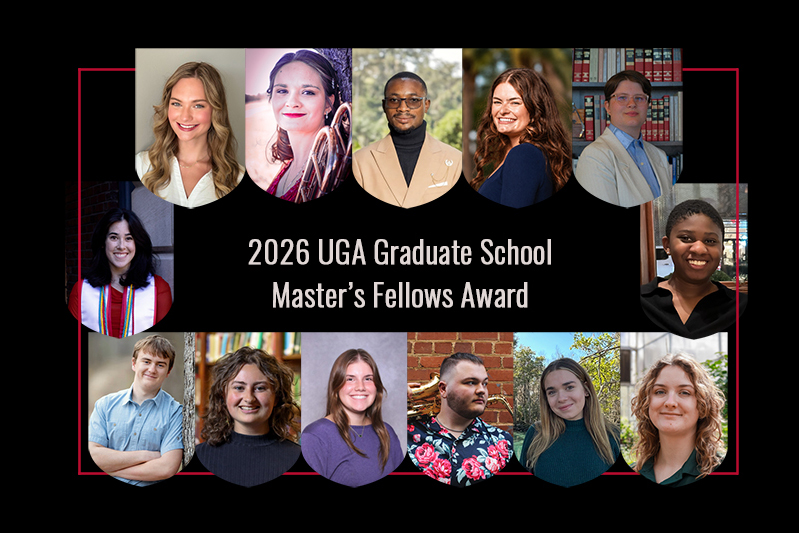
The Graduate School Master’s Fellows Award is designed to recruit highly competitive students who will advance the research and scholarship mission of the University. Selected recipients come from various disciplines across campus.
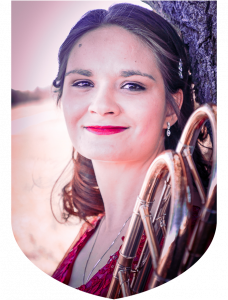
Fatima Bahraini is a graduate student in trombone performance at the University of Georgia, studying under the guidance of Dr. Joshua Bynum. A trombonist, composer, and educator, her interests span orchestral performance, music composition, and music education. She is particularly passionate about artistic collaboration across disciplines and creating work that is both intellectually engaging and accessible.
Bahraini earned bachelor’s degrees in trombone performance, music composition, and music education from Metropolitan State University of Denver in 2025. During her undergraduate studies, she was an active member of the musical community, performing with ensembles including the MSU Denver Symphony Orchestra, MSU Denver Symphonic Band, Colorado Youth Symphony Orchestra, and Colorado Wind Ensemble. She also performed at the National Trumpet Competition as a bass trumpet player with the MSU Denver Trumpet Ensemble and was a founding member of MSU Denver’s 7th Street Brass Quintet.
As a composer, Bahraini received the Fred Hess Memorial Prize in Composition for her piece “Merry Structure,” a movement from her larger work “Ballet in Pictures.” Her work reflects her commitment to collaboration across artistic mediums and her belief in creating music that engages audiences both intellectually and emotionally. As an educator, she has taught extensively in K-12 classrooms throughout the Denver metropolitan area and remains passionate about making music education accessible to young people.
At UGA, Bahraini is continuing to develop as a multifaceted musician and artist while pursuing her master’s degree in trombone performance. After completing her degree, she plans to establish a career as a professional orchestral musician, solo artist, and composer while continuing to give back to her community through music and education.
Bio info not available
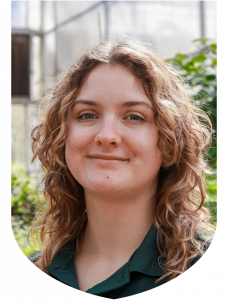
Kelsey Bartlett is a graduate student in the Warnell School of Forestry and Natural Resources at the University of Georgia. Under the guidance of Dr. Lizzie King, she will be studying plant community assembly and ecosystem function following coastal grassland restoration efforts.
Bartlett graduated summa cum laude with a bachelor of science in environmental studies from George Washington University. Her undergraduate research paired herbarium records with historic climate data to quantify and explain changes in plant flowering and fruiting times. This research culminated in a highlighted publication in the American Journal of Botany.
After graduating, she spent three years working in public horticulture at the Atlanta Botanical Garden – Gainesville. Her time as a horticulturist not only strengthened her appreciation for the natural communities of the Southeast, but also underlined the diverse and important ways that people engage with nature. This experience fostered a desire to learn, share, and implement different types of ecological knowledge, which ultimately drove her to continue her education.
Bartlett is thrilled to be a part of the University of Georgia’s historic and vibrant plant research community. With a master’s degree, she aims to work as an ecologist to support functional ecosystem management in the face of rapid climate and land use change.
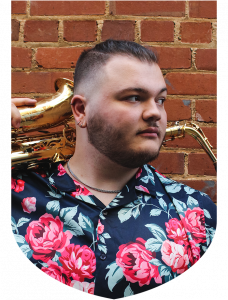
Julien Berger is a graduate student pursuing a master of music in saxophone performance at the University of Georgia, where he will study under the tutelage of Dr. Brandon Quarles while also serving as a teaching assistant with the UGA Arts Collaborative. His interests center on interdisciplinary artistic collaboration and its potential to expand music education and engagement.
Berger earned bachelor’s degrees in saxophone performance and music composition from UGA in 2023. During his undergraduate studies, he performed with several of UGA’s premier ensembles, including the UGA Wind Ensemble, Hodgson Singers, Symphony Orchestra, and Jazz Ensemble. He also performed as the alto saxophonist for the saxophone quartet Mixed Media, which won first prize at the Fischoff and Coltman National Chamber Music Competitions in 2021. As a composer, Berger has written works for chamber and large ensembles, including co-composing the opera Down the Rabbit Hole with Bryan Wysocki and Abigail Head.
Berger has also pursued interdisciplinary artistic collaboration through the Athens Hip Hop Harmonic, a project designed to connect the Hugh Hodgson School of Music with Athens’ hip-hop music community. As a composer and arranger for the project, he collaborated with hip-hop artist Cassie Chantel and the African American Choral Ensemble. Since graduating from UGA, Berger has worked as a saxophonist, clarinetist, composer, and teacher throughout the greater Atlanta area.
Drawn to Athens’ vibrant music culture and the Hugh Hodgson School of Music’s forward-thinking approach to education, Berger is excited to explore interdisciplinary collaboration within K-12 music education. After completing his degree, he plans to grow his private music practice while continuing to perform with chamber groups, bands, and pit orchestras.
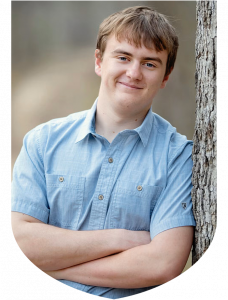
Ian Brunetz is a graduate student in the Odum School of Ecology at the University of Georgia, where he studies under the mentorship of Dr. Krista Capps. Growing up near the freshwater ecosystems of the Tennessee River and visiting institutions such as the Tennessee Aquarium and Reflection Riding fostered his fascination with animals, particularly invertebrates. His research interests focus on freshwater ecology, invertebrate physiology, and the ways in which invertebrates influence ecosystem processes through their adaptations.
Brunetz’s scientific journey began at the Tennessee Aquarium, where he raised upside-down jellyfish (Cassiopea spp.) and contributed to a project investigating whether these jellyfish could survive a rapidly acidifying ocean. This experience introduced him to animal physiology and showed him that he could pursue a career studying invertebrates. He later attended the University of Alabama, where he worked as a research assistant with Dr. Carla Atkinson. There, he studied freshwater mussel physiology and investigated what variation in their colorful shells could reveal about their environments.
Brunetz further expanded his research experience through internships focused on freshwater ecosystems. He collected metabarcoding samples of freshwater insects in Alaska and later returned to UGA to work with Dr. Capps and Dr. Irene Sánchez González, studying respiration in invasive Asian clams (Corbicula fluminea). These experiences strengthened his interest in ecology and systems-level thinking and shaped his goal of understanding how invertebrate adaptations influence ecosystem processes.
At UGA, Brunetz is continuing his research with Dr. Capps, studying freshwater shrimp and their ecological significance within Southeastern ecosystems while investigating how organic carbon moves through local wetland systems. Through his research, he hopes to deepen our understanding of the ecological roles of freshwater invertebrates and their contributions to healthy and resilient ecosystems.
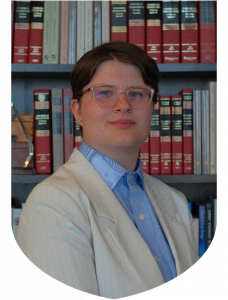
Ignatz DeCourcey is a graduate student in the Department of History at the University of Georgia. Their research will focus on United States social justice movements from the 1980s and ‘90s with an emphasis on radical sexual politics and the LGBT community.
DeCourcey received a bachelor of arts, magna cum laude, from Smith College in government and the study of women, gender, and sexuality. As an undergraduate student, they participated in Smith’s Museums Concentration program and focused on political praxis, composing a capstone entitled, “Branching the Gap: Questioning Divides on the American East Coast.” Through this work, DeCourcey highlighted objects of cultural significance from the American South Atlantic. This project drew from personal experiences, as well as work at both the Smithsonian Institution’s National Museum of American History and Historic Jerusalem Mill Village.
The decision to study history at UGA came from DeCourcey’s desire to continue engaging with museum work. They would like to research the political history of the late 20th century and identify methods of making their findings presentable to the public. Throughout this work, they hope to gain a better understanding of the significant alternative lifestyles held in social justice frameworks and how these advocacy groups influenced the politics of the United States.
Ultimately, DeCourcey would like to return to the world of curatorial museum work, finding ways for museums to make complex stories of unconventional subjects accessible to the public. After completing their master’s degree, DeCourcey would like to pursue a Ph.D. and continue working in the realm of education.
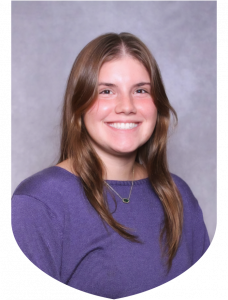
Lana Gaspard is a graduate student in the Department of Plant Biology at the University of Georgia, where she studies under the mentorship of Dr. Megan DeMarche. Her research interests center on plant resilience and how plants adapt to changing environments, with a particular focus on Chamaecrista fasciculata and the significance of its seedbank.
Originally from Kaplan, Louisiana, Gaspard earned her bachelor’s degree in biology at the University of Louisiana at Lafayette. There, she conducted research recreating historical, climatic heatwaves using simulated drought stress in Mimulus guttatus (syn. Eryranthre guttata) to test effects on maternal provisioning and the potential evolutionary consequences of climate change. She also participated in an undergraduate research fellowship program at the University of Michigan Biological Station studying Pteridium aquilinum as a dominant species in forest understories and its role in ecosystem function.
Gaspard chose UGA for its field-based research and collaborative academic community. After obtaining her master’s degree, she hopes to pursue a career in environmental consulting to help solve real-world ecological problems and make this earth a little greener. Gaspard is honored to be named a Graduate School Master’s Fellow and looks forward to contributing to UGA’s research community.
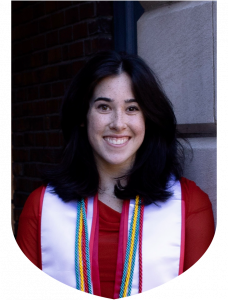
Annalise Hale is a graduate student in the Department of Public Administration and Policy at the University of Georgia.
Hale graduated summa cum laude with a bachelor of arts in sociology from the University of Louisville in December 2025. During her undergraduate studies, she served as a research assistant in the Department of Sociology for a project analyzing the use of martial arts as a therapy tool for trauma recovery, which she then presented at state and national conferences.
In addition, she served as a Data and Advanced Analytics Intern for the Kentucky Council on Postsecondary Education. There, she analyzed data on adult learners at Kentucky’s postsecondary institutions and created policy briefs for state legislators. This work further developed her passion for supporting non-traditional students through research and policy change.
Beyond her professional experiences, Hale was a leader for the University’s Engage Lead Serve Board, where she served as a First-Year Leadership Co-Director and Service Co-Coordinator. She led a program designed to develop the leadership and community engagement skills of first-year students. Hale also coordinated the University’s two largest days of service, leading a total of 825 volunteers and their efforts across 30+ service sites in Louisville.
Hale is excited to build upon her passion for service and community engagement through the master of public administration program. UGA’s faculty and curriculum provide an excellent foundation for a successful career as a public servant. Upon graduation, she aims to work toward expanding access to postsecondary education through state-level policy changes.
Bio info not available
Bio info not available
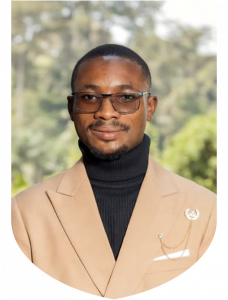
Emmanuel Mensah is a graduate student in the Department of Geography at the University of Georgia. He is thrilled to join Dr. Weiming Hu’s research group, where he will contribute to developing compassionate, uncertainty aware machine learning models to forecast extreme events like floods and heatwaves, all with the heartfelt goal of protecting vulnerable communities in Ghana and around the world.
Mensah graduated with a bachelor’s degree in meteorology and climate science from Kwame Nkrumah University of Science and Technology (KNUST) in Ghana. During his time there, he served as a teaching assistant, interned at the Ghana Meteorological Agency and Kotoka International Airport, and conducted his own research project on urban green spaces and human thermal comfort. He also volunteered as a ForWEB Ambassador, generating 24 hour impact based weather forecasts for his home country.
His growing technical toolkit includes Python, GIS, CDO, FORTRAN, and LaTeX. These experiences deepened his love for disaster risk reduction and sparked his curiosity in flood resilience, climate adaptation, and artificial intelligence. Mensah has also earned certifications from ALX Africa, Columbia University, and the United Nations.
Growing up in Kasoa, Ghana, a town where flooding has repeatedly swept away homes and dreams, Mensah carries a deeply personal mission to become part of the world’s solution. He dreams of developing science based tools that uplift vulnerable communities.
Mensah hopes to continue this path by pursuing a Ph.D. in climate science and risk management after his master’s degree. Until then, he looks forward to his graduate studies and research while savoring all the warmth and beauty that Athens and the University of Georgia have to offer.
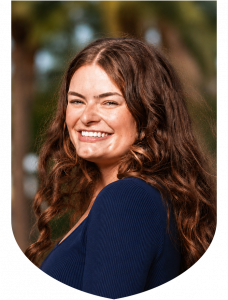
Camryn Nelson is a graduate student in the Department of Geography at the University of Georgia. She works with Dr. Gabe Kooperman, studying how weather and climate extremes shape the natural and built environment. Her research interests include severe storms and their impacts as well as post-disaster landscape changes and recovery. Ultimately, her goal is to produce research that advances resilience to extreme weather and informs more effective planning, mitigation, and recovery strategies.
Originally from Lincoln, Nebraska, Nelson earned her bachelor’s degree in meteorology from Embry-Riddle Aeronautical University, graduating summa cum laude. Her research focused on lake-effect snow variability and the influence of lake ice. She participated in a Research Experience for Undergraduates program in atmospheric and geological hazards, authored a publication, and received multiple scholarships and grants supporting her academic work. Nelson also served as secretary and vice president of her student chapter of the American Meteorological Society, managed the university’s Weather Tutoring Lab, and received the Outstanding Graduating Student Award from her department.
Nelson came to UGA because of its strong interdisciplinary approach to geographic and environmental research, and the opportunity to work at the intersection of weather, earth science, and society. After completing her degree, Nelson plans to pursue a career in meteorological consulting, risk analysis, or forensic meteorology, where she can apply physical science to help communities and organizations better prepare for and recover from weather-related hazards.
Bio info not available
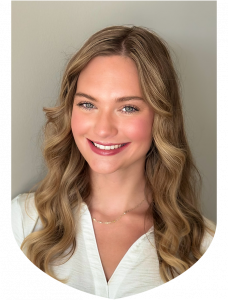
Madelyn Rippo is a graduate student in the Department of Food Science and Technology at the University of Georgia, where she studies under the mentorship of Dr. Hualu Zhou. Her research focuses on plant proteins, particularly enhancing their structural and functional properties to improve their applicability and bioavailability in food systems. She is also exploring the integration of agentic artificial intelligence into experimental research, including its potential to iteratively optimize experimental conditions based on research outcomes.
Rippo earned her bachelor of science in food science from the University of Florida, where she developed an interest in the relationship between food composition, processing, and product quality. As an undergraduate research assistant, she contributed to research on reduced- and no- or low-alcohol wines, investigating fermentation methods, deacidification strategies, and their effects on physicochemical and sensory properties.
Her interest in applying food science to product innovation was further shaped by an R&D internship with Perdue Farms, where she gained experience in product formulation, process optimization, pilot-scale production, and new product development. At the University of Florida, she also gained experience in sensory testing and competitive product development.
At UGA, Rippo aims to deepen her understanding of food chemistry and protein functionality while developing the skills to translate fundamental research into practical applications. Through her research, she hopes to bridge scientific discovery with the development of innovative food products. After completing her graduate studies, Rippo plans to pursue a career in food research and development, applying her scientific training to create products that advance the food industry.
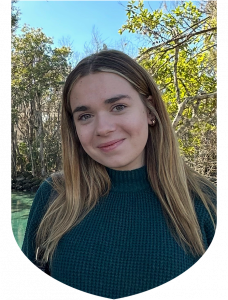
Sarah Smith is a graduate student in the Department of Communication at the University of Georgia. Her research focuses on communication in families with children with disabilities, specifically neurodevelopmental disabilities.
Smith graduated magna cum laude from the University of South Florida with her bachelor’s in communication. There, she was a graduate of the USF Judy Genshaft Honors College where she served as a student leader in the form of a Peer Mentor and was fortunate to extend her college education further into experiential learning.
During her undergraduate years, Smith worked on research centered on how family role theory is enacted within the context of neurodevelopmental disability. She hopes to continue her research on this topic and expand to more family communication theories during her master’s.
Smith is originally from London, United Kingdom and moved to Florida to pursue higher education. Her background as an international student fueled her passion for communication and understanding the differences in cultural communication as she adapted herself to her new normal.
She is honored to be named a Graduate School Master’s Fellow and excited to experience everything the University of Georgia has to offer. After completing her degree, she hopes to continue her education with a Ph.D. and become a professor of communication.
 Grace Speicher is a graduate student in the Odum School of Ecology at the University of Georgia, where she studies under the mentorship of Dr. Charles van Rees in the Wildlife and Water Laboratory. As a Natural Infrastructure Graduate Fellow, her research focuses on flooding regimes of green tree reservoirs in Arkansas. Through her work, she hopes to better understand aquatic ecosystems and inform practical approaches to conservation and restoration.
Speicher earned degrees in environmental sciences, Italian, and environmental earth sciences from the University of Notre Dame. During her undergraduate studies, she completed a thesis examining the impacts of an invasive plant species on Alaskan wetlands. She also studied aquatic systems across diverse regions, including the Midwest, Italy, and Ireland. These experiences strengthened her interest in freshwater ecology and inspired her to pursue community-driven research that can guide practical solutions to environmental challenges.
At UGA, Speicher is excited to continue developing her research in freshwater ecology and contribute to the Wildlife and Water Laboratory. After earning her master’s degree, she plans to continue pursuing aquatic research, either through a Ph.D. or a career in ecological restoration. Speicher is honored to be a Graduate School Master’s Fellow and looks forward to contributing to UGA’s research community.
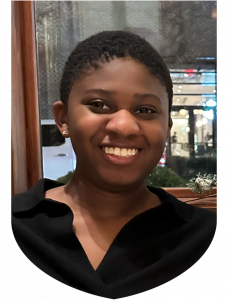 Olivia Walker is a graduate student in the Department of Plant Biology at the University of Georgia, where she studies under the mentorship of Dr. Anny Chung. Her research interests focus on plant-soil interactions, fire ecology, and nematology. Specifically, her research examines plant-soil-nematode interactions and post-fire recovery trajectories of nematodes within the longleaf pine savanna ecosystem.
Walker recently earned her bachelor’s degree from Kennesaw State University before joining Dr. Chung’s lab as a first-year masters student at UGA. Through her research, she aims to better understand the ecological relationships between plants, soils, and nematodes and how these communities respond to environmental disturbances such as fire.
Walker is grateful to the mentors who have supported her throughout her academic journey and helped her reach this achievement. As she continues her graduate studies at UGA, she looks forward to expanding her research and contributing to a greater understanding of longleaf pine savanna ecosystems.


